
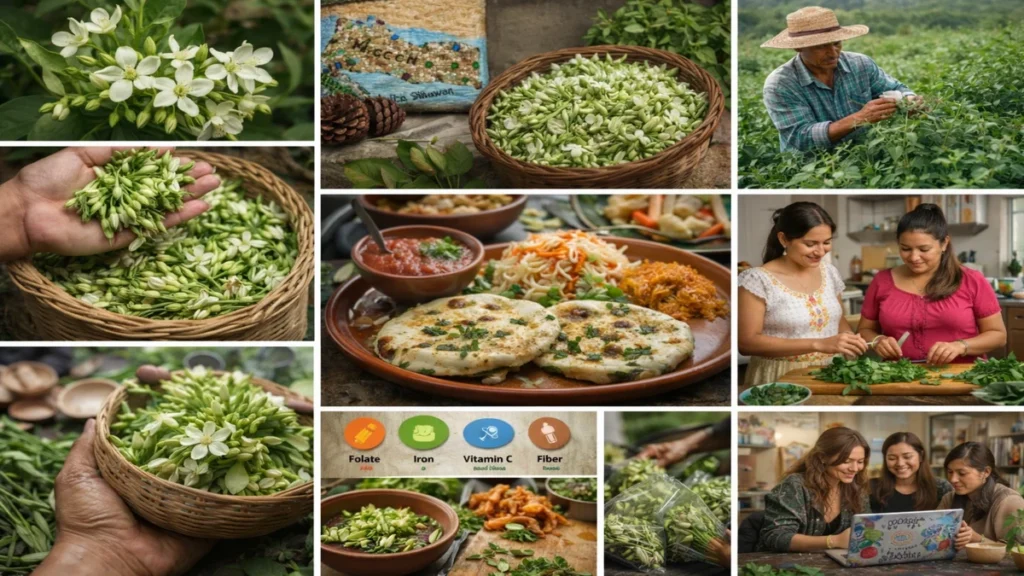
Loroco is an edible flower bud native to Central America that holds a unique place in regional food culture, especially in El Salvador and Guatemala. For many people searching the word “loroco,” the question is simple and practical: what is it, what does it taste like, and why does it matter? The answer unfolds across botany, cuisine, history, and identity. Loroco is the unopened flower bud of a climbing vine, harvested while still tender and used as a savory ingredient with a flavor that is earthy, green, slightly floral, and faintly nutty. It is most famously known as the filling for pupusas, the thick corn tortillas that are considered El Salvador’s national dish, but its role extends far beyond that single preparation.
Understanding loroco means understanding how food becomes culture. For generations, families have grown it in backyard gardens, harvested it seasonally, and folded it into everyday meals and celebrations. Its taste evokes place, memory, and continuity. At the same time, loroco is now moving into global culinary spaces, appearing in restaurants, food writing, and specialty markets far from its original home. This movement reflects a broader pattern in which regional ingredients gain international recognition while carrying their local meanings with them.
This article explores loroco from multiple angles, its botanical identity, its sensory qualities, its role in traditional and contemporary cooking, its nutritional value, and its cultural significance. By doing so, it offers not just information about an ingredient, but a portrait of how food connects people to land, history, and one another.
Botanical Identity and Origins
Loroco comes from a climbing vine native to tropical and subtropical regions of Central America. The plant produces clusters of green buds that are harvested before the flowers open. These buds are the edible part and are valued for their tenderness and concentrated flavor. The vine thrives in warm climates with consistent moisture and well-drained soil, making it well suited to the agricultural conditions of El Salvador, Guatemala, Honduras, Nicaragua, and parts of southern Mexico.
The plant’s long presence in these regions means that loroco is not an introduced crop but a deeply rooted one, shaped by centuries of human interaction with the environment. Indigenous communities used the plant as part of their traditional food systems long before modern nation-states existed. Over time, its cultivation became integrated into home gardens, small farms, and local markets, reinforcing its status as a familiar and trusted food.
Because it is harvested before flowering, loroco represents a moment of potential rather than full bloom, a botanical pause that captures the plant’s energy and flavor at a particular stage. This timing contributes to its distinctive culinary qualities and its symbolic association with freshness and seasonality.
Flavor Profile and Sensory Experience
Loroco’s flavor is complex and difficult to categorize using conventional culinary language. It is often described as vegetal and earthy, with hints of asparagus, artichoke, chard, and mild floral sweetness. There is also a subtle tanginess and a faint nutty undertone that adds depth. The aroma is green and slightly pungent, which softens with cooking and blends harmoniously with dairy, grains, and mild proteins.
Texturally, loroco buds are tender but not mushy. When lightly cooked, they retain a gentle firmness that provides contrast in soft dishes like melted cheese or masa dough. This combination of flavor and texture makes loroco particularly well suited for fillings, sautés, and stews, where it can be evenly distributed and appreciated in small bites.
Its sensory profile is part of why loroco is so culturally resonant. The taste is immediately recognizable to those who grew up with it, functioning almost as a flavor memory that evokes home and tradition.
Traditional Culinary Uses
The most iconic dish featuring loroco is the pupusa, a thick corn tortilla stuffed with cheese and loroco buds and cooked on a flat griddle. This combination balances the creamy richness of cheese with the green, slightly bitter notes of loroco, creating a flavor profile that is comforting and distinctive. Pupusas filled with loroco are so culturally important that the ingredient has become a symbol of Salvadoran cuisine itself.
Beyond pupusas, loroco appears in soups, stews, omelets, rice dishes, and sauces throughout Central America. It may be sautéed with onions and garlic, mixed into scrambled eggs, or added to brothy dishes where its flavor infuses the liquid. In festive contexts, it is often combined with other seasonal ingredients, marking particular times of year and reinforcing its connection to agricultural cycles.
Preparation methods vary by household and region, but they share an emphasis on simplicity. Loroco is rarely heavily spiced or masked, because its value lies in its own flavor.
Nutrition and Health Context
Loroco contributes to diets not only as a flavoring agent but also as a source of nutrients. Like many edible flowers and green plant foods, it contains vitamins, minerals, and phytonutrients. It provides vitamin C and several B vitamins that support metabolic processes, as well as minerals such as calcium and iron that are important for bone health and oxygen transport.
It also contains plant compounds with antioxidant properties, which help protect cells from oxidative stress. While loroco is not typically consumed in large quantities, its inclusion as part of a varied diet adds nutritional diversity and contributes to overall dietary balance.
When loroco is preserved through canning or pickling, its nutritional profile may change, particularly in terms of sodium content. This makes fresh loroco the preferred option nutritionally, though preserved forms play an important role in making the ingredient accessible to people outside its growing regions.
Cultivation and Harvesting
Loroco is cultivated on both small and modest commercial scales. In home gardens, vines are often trained along fences or trellises, making efficient use of space. The plant is relatively hardy and, once established, can produce harvests over multiple seasons.
Harvesting is done by hand, with careful selection of unopened buds. This labor-intensive process reflects the value placed on quality and freshness. In local markets, fresh loroco is sold in small bunches, while frozen or canned versions are produced for export and for urban consumers who lack access to fresh supplies.
Because it is closely tied to seasonal rhythms, loroco also functions as a marker of time, signaling particular harvest periods and aligning food consumption with natural cycles.
Cultural Meaning and Social Life
Loroco is more than a food ingredient; it is a cultural signifier. In Central American households, cooking with loroco often involves collective preparation, reinforcing family bonds and intergenerational knowledge. Recipes are passed down orally, adjusted to taste, and associated with particular people and moments.
For diaspora communities, loroco becomes a symbol of home. Finding it in a foreign market or tasting it in a restaurant abroad can evoke powerful feelings of nostalgia and belonging. In this way, loroco travels not just as a product but as a carrier of identity.
Its role in celebrations, daily meals, and communal cooking makes loroco part of a social fabric that connects people through shared practices and sensory experiences.
Modern Culinary Innovation
As interest in global cuisine grows, loroco has found new contexts beyond traditional dishes. Chefs incorporate it into pasta, risotto, pizzas, and salads, pairing it with ingredients like mushrooms, cheeses, and herbs to highlight its flavor in new ways. These adaptations introduce loroco to new audiences while respecting its original character.
Food festivals, cooking shows, and social media have also played a role in expanding its visibility. Loroco is increasingly discussed as part of a broader movement toward appreciating regional ingredients and the cultures they represent.
Comparison with Other Edible Flowers
| Flower | Flavor | Typical Use | Cultural Context |
|---|---|---|---|
| Loroco | Earthy, vegetal, mild floral | Savory fillings, stews | Central America |
| Squash blossom | Mild, slightly sweet | Stuffed, fried | Mediterranean, Americas |
| Hibiscus | Tart, floral | Drinks, jams | Global tropics |
This comparison highlights loroco’s distinctive savory role among edible flowers.
Expert Reflections
Food anthropologists often note that ingredients like loroco function as cultural anchors, linking people to specific places and histories. Nutritionists point out the value of including diverse plant foods for health and resilience. Culinary historians emphasize that understanding such ingredients deepens appreciation for the complexity of regional cuisines.
These perspectives converge on the idea that loroco matters not only for what it tastes like, but for what it represents.
Takeaways
- Loroco is an edible flower bud native to Central America with deep cultural roots
- Its flavor is earthy, green, and subtly floral, making it ideal for savory dishes
- It plays a central role in traditional foods like pupusas and family meals
- The plant provides nutritional benefits and supports dietary diversity
- Growing global interest reflects broader appreciation of regional cuisines
Conclusion
Loroco tells a story of how a simple plant can carry layers of meaning. It connects land and people, past and present, local tradition and global curiosity. Through its cultivation, preparation, and sharing, loroco becomes a medium of memory and identity as much as a source of nourishment.
As it moves into wider culinary spaces, the challenge is to preserve the knowledge and respect that surround it. Doing so ensures that loroco remains not just an ingredient, but a living part of Central American culture, offering both flavor and a reminder of the intimate ties between food, place, and community.
FAQs
What is loroco?
It is the edible flower bud of a vine native to Central America, used as a savory ingredient.
What does loroco taste like?
It tastes earthy and vegetal with mild floral and nutty notes.
How is loroco traditionally used?
Most commonly in pupusas, as well as in soups, eggs, and stews.
Is loroco nutritious?
Yes, it contains vitamins, minerals, and antioxidant compounds.
Where can loroco be found?
Fresh in Central America and frozen or canned in international markets.