
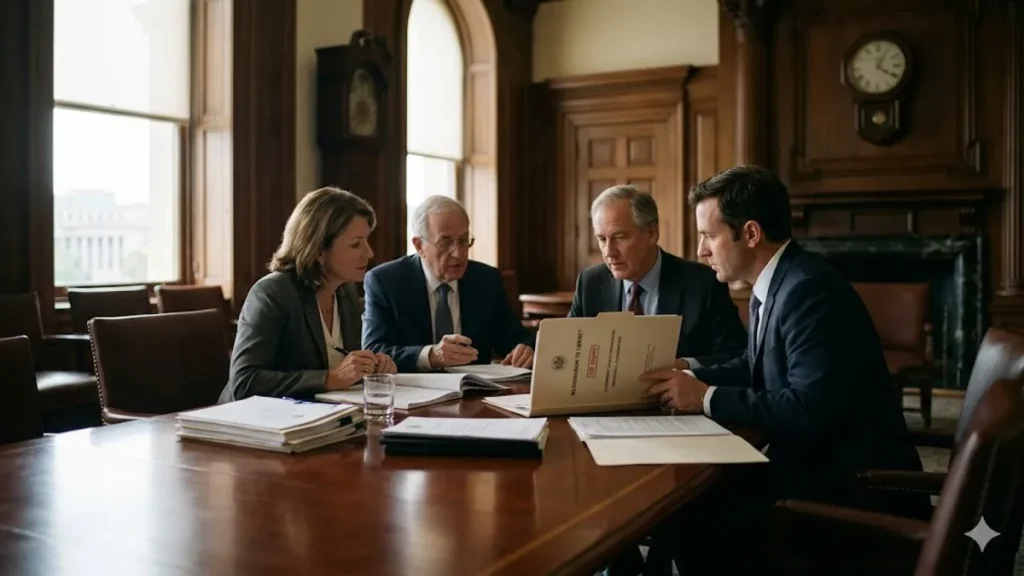
I begin with a simple truth: most of what governments decide never starts in parliament, on television, or even in public debate. It starts in documents few citizens ever see. Among the most consequential of these is the memorandum to cabinet, a formal submission used by ministers to present policy proposals, seek approvals, and coordinate action across government. Within the first pages of such a memo lies the essence of governance itself: a structured argument, backed by data, framed in political reality, and aimed at persuading fellow ministers to act.
In the first hundred words of any serious discussion of governance, the memorandum to cabinet answers a central question: how do governments actually make decisions? The answer is not speeches or press conferences. It is process. It is documentation. It is consensus-building. A memorandum to cabinet functions as both roadmap and battleground, where competing priorities, fiscal constraints, and political strategies converge.
Across Westminster-style systems, including Canada, the United Kingdom, Australia, and Pakistan, this instrument has evolved into a cornerstone of executive decision-making. It is both technical and political, bureaucratic and strategic. And while it may appear dry on the surface, its consequences ripple outward, shaping legislation, budgets, and ultimately, citizens’ lives.
The Anatomy of a Memorandum to Cabinet
At its core, a memorandum to cabinet is a structured policy document. Yet its structure is anything but arbitrary. It reflects decades of institutional refinement designed to ensure clarity, accountability, and efficiency.
Typically, the document begins with a summary and recommendations, followed by background context, analysis of options, financial implications, legal considerations, and communication strategies. Each section serves a distinct purpose. The summary distills complexity into actionable points. The analysis weighs alternatives. The financial section signals feasibility.
Governments rely on this standardized format to streamline decision-making. As political scientist Peter Aucoin once observed, “Cabinet government depends on disciplined information flows that enable collective responsibility” (Aucoin, 2012). The memorandum is that flow, translating departmental expertise into collective judgment.
What makes the document particularly powerful is its dual audience. It must satisfy bureaucrats with detailed analysis while persuading politicians with clear, strategic framing. This balance is not easily achieved, and much of governance hinges on getting it right.
READ: Anonibs Explained: Safety, Risks, and Reality
Historical Evolution and Institutional Roots
The memorandum to cabinet did not emerge overnight. Its origins trace back to the evolution of cabinet government in Britain during the 18th and 19th centuries, when informal discussions among ministers gradually formalized into structured decision-making processes.
By the early 20th century, governments began institutionalizing documentation practices to manage increasingly complex state functions. The expansion of welfare states, economic regulation, and international diplomacy required more rigorous coordination. Memoranda became essential tools.
In Canada, for instance, the Privy Council Office formalized the process in the mid-20th century, standardizing submissions to ensure consistency (Savoie, 1999). Similarly, in the United Kingdom, cabinet papers became central to governance, particularly during wartime, when rapid yet coordinated decisions were critical.
Pakistan inherited elements of this system through its colonial administrative legacy. Over time, it adapted the memorandum format to its own political and bureaucratic context, integrating it into federal cabinet procedures.
Why Memoranda Matter in Modern Governance
The importance of memoranda to cabinet lies not just in their content but in their function. They serve as the bridge between policy ideas and formal government action.
Without such documents, decision-making would risk becoming fragmented and reactive. Memoranda impose discipline. They require ministers to articulate objectives, justify expenditures, and anticipate consequences.
Dr. Jonathan Craft, a public policy scholar, notes, “Policy advice within government is shaped as much by institutional processes as by political priorities” (Craft & Halligan, 2020). The memorandum is one of those processes, shaping how ideas are presented and evaluated.
Moreover, memoranda facilitate collective responsibility. Cabinet decisions are not individual choices but collective commitments. The document ensures that all ministers have access to the same information, enabling informed debate.
Comparative Practices Across Governments
While the core concept remains consistent, the specifics of memoranda to cabinet vary across jurisdictions.
| Country | Key Authority Body | Confidentiality Level | Standardization | Digital Integration |
|---|---|---|---|---|
| Canada | Privy Council Office | High | Highly formal | Advanced |
| United Kingdom | Cabinet Office | High | Formal | Moderate |
| Australia | Department of PM&C | High | Highly formal | Advanced |
| Pakistan | Cabinet Division | High | Moderately formal | Emerging |
Canada and Australia are often cited as models of procedural rigor, with detailed templates and strict guidelines. The United Kingdom maintains a strong tradition but allows for more flexibility. Pakistan continues to modernize its processes, balancing inherited frameworks with contemporary needs.
Despite these differences, one constant remains: confidentiality. Memoranda are typically classified documents, reflecting the sensitivity of the decisions they inform.
The Political Dimension: Strategy Behind the Paper
Beyond structure and process, memoranda are inherently political documents. They are crafted not only to inform but to persuade.
Ministers must anticipate objections, align proposals with broader government priorities, and frame recommendations in a way that resonates with colleagues. This requires a deep understanding of both policy and politics.
As former UK Cabinet Secretary Gus O’Donnell once remarked, “Good policy is not enough; it must be presented in a way that secures agreement” (O’Donnell, 2014). The memorandum is where that presentation happens.
Political strategy often shapes the timing, language, and emphasis of the document. A proposal may be framed differently depending on economic conditions, public opinion, or internal cabinet dynamics.
Key Components of an Effective Memorandum
An effective memorandum to cabinet is not merely comprehensive; it is strategic. It balances detail with clarity and analysis with persuasion.
| Component | Purpose | Common Pitfalls |
|---|---|---|
| Executive Summary | Highlight key decisions | Overly technical language |
| Background | Provide context | Excessive detail |
| Options Analysis | Compare alternatives | Biased presentation |
| Financial Implications | Assess costs and funding | Underestimating expenses |
| Legal Considerations | Ensure compliance | Ignoring regulatory constraints |
| Communications Strategy | Plan public messaging | Lack of clarity |
Each component must align with the overall objective: securing cabinet approval. Failure in any section can weaken the entire proposal.
Expert Perspectives on Policy Documentation
Experts across disciplines emphasize the centrality of structured documentation in governance.
Professor Mark Bovens, a leading scholar in public administration, argues, “Accountability in government depends on documented decision-making processes that can be reviewed and scrutinized” (Bovens, 2007).
Similarly, economist Joseph Stiglitz has highlighted the role of information in policy effectiveness, stating, “Transparent and well-structured information is essential for good governance” (Stiglitz, 2002).
A senior civil servant in Australia, speaking anonymously in a 2021 policy review, noted, “The quality of a cabinet submission often determines whether a policy lives or dies.”
These perspectives underscore a common theme: documentation is not bureaucracy for its own sake. It is the foundation of accountability, transparency, and effective decision-making.
Challenges and Criticisms
Despite its importance, the memorandum to cabinet is not without criticism. Some argue that the process can be overly bureaucratic, slowing down decision-making in urgent situations.
Others point to issues of transparency. Because memoranda are typically confidential, the public has limited insight into how decisions are made. This can fuel perceptions of opacity and elitism.
There is also the risk of politicization. While memoranda are meant to present objective analysis, they can be shaped by political agendas. Selective framing of data or omission of alternatives can influence outcomes.
Yet, as governance grows more complex, the need for structured decision-making tools remains undeniable. The challenge lies in balancing rigor with flexibility, confidentiality with transparency.
Digital Transformation and the Future of Cabinet Memoranda
The digital age is reshaping how governments prepare and process memoranda. Electronic submission systems, data analytics, and collaborative platforms are increasingly integrated into policy workflows.
In countries like Canada and Australia, digital platforms allow for real-time collaboration among departments, reducing delays and improving coordination. Artificial intelligence tools are also beginning to assist in data analysis and policy modeling.
However, digitalization brings its own challenges, including cybersecurity risks and the need for robust data governance frameworks.
The future of memoranda to cabinet will likely involve greater integration of technology, enhanced transparency mechanisms, and evolving standards of accountability.
Takeaways
- Memoranda to cabinet are central to government decision-making across Westminster-style systems.
- They translate policy ideas into structured proposals for collective approval.
- Their effectiveness depends on clarity, analysis, and strategic presentation.
- Despite criticisms, they remain essential for accountability and coordination.
- Digital transformation is reshaping how these documents are prepared and reviewed.
- Political considerations play a significant role in their content and timing.
Conclusion
I find that the memorandum to cabinet reveals something profound about governance: decisions are rarely spontaneous. They are constructed, debated, refined, and documented before they are ever announced.
This document, often hidden from public view, is where ideas are tested against reality. It is where ambition meets constraint, and where policy becomes actionable. While it may lack the drama of parliamentary debates or election campaigns, its impact is no less significant.
As governments face increasingly complex challenges, from economic instability to climate change, the need for structured, informed decision-making will only grow. The memorandum to cabinet, in all its technical detail and political nuance, will remain a vital instrument.
Understanding it is not just an exercise in administrative curiosity. It is a window into how power operates, how decisions are made, and how the machinery of government truly functions.
FAQs
What is a memorandum to cabinet?
A memorandum to cabinet is a formal document used by ministers to propose policies, seek approvals, and provide analysis for collective government decisions.
Why are these memoranda confidential?
They contain sensitive policy discussions, financial details, and political strategies, making confidentiality essential for candid deliberation.
Who prepares a memorandum to cabinet?
Typically, government departments prepare the document under the direction of a minister, often with input from policy analysts and legal advisors.
How does it influence policy decisions?
It presents options, analysis, and recommendations, guiding cabinet discussions and shaping final decisions.
Are memoranda ever made public?
In some cases, they may be released years later through archives or freedom of information requests, depending on national laws.