
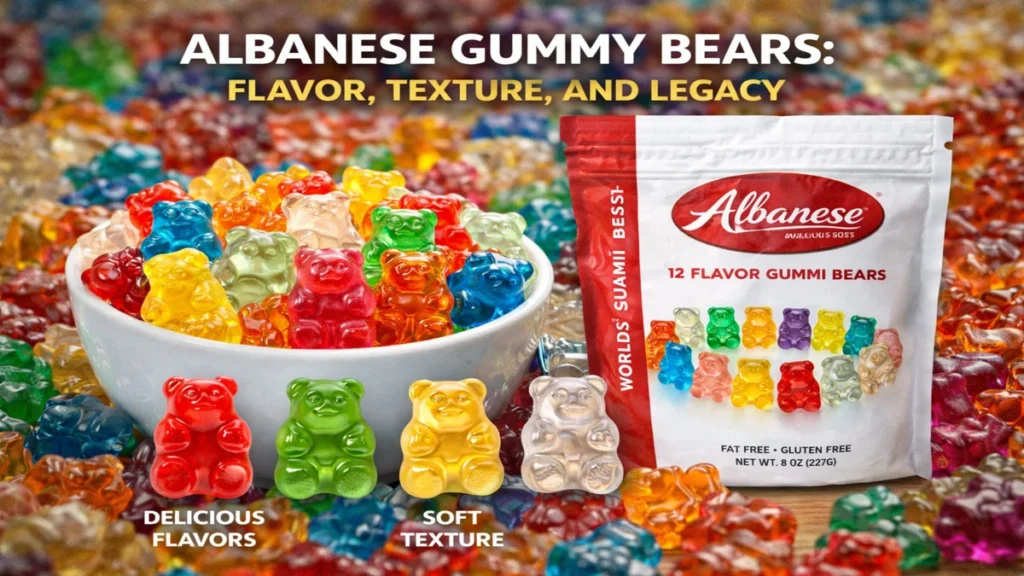
Albanese gummy bears are widely regarded by consumers as a modern standard for what a gummy bear should taste like: intensely fruity, soft without being fragile, and varied enough to keep each handful interesting. Within the first bite, the candy signals its difference from many mass-market gummies, offering a burst of flavor that feels layered rather than flat. For readers searching to understand why Albanese gummy bears inspire such devotion, the answer lies not in novelty but in a deliberate rethinking of flavor density, manufacturing control, and consumer experience. These gummy bears did not reinvent candy for shock value; they refined it through focus and patience.
Unlike the earliest gummy bears, which emerged in Europe in the early twentieth century and prioritized shelf stability and uniform shape, Albanese gummies reflect late-twentieth-century American consumer expectations. Shoppers increasingly wanted candy that felt indulgent and expressive, not merely sweet. Albanese gummy bears answered that demand with multiple fruit profiles, a softer chew, and an unmistakable aroma that differentiated them instantly from competitors. Over time, these qualities turned a regional confection into a national reference point for gummy candy quality.
This article explores how Albanese gummy bears came to occupy that role. It traces the company’s origins, examines the technical and sensory characteristics that distinguish the product, and situates the brand within broader conversations about American food manufacturing, nostalgia, and indulgence. Rather than treating gummy bears as trivial sweets, this examination considers them as cultural and commercial artifacts shaped by taste science, consumer trust, and small-business persistence.
The Origins of Albanese Gummy Bears
The roots of Albanese gummy bears begin not with gummies at all, but with a family-run candy business in Indiana. Albanese Candy began as a small operation focused on traditional confections such as chocolate, caramel, and roasted nuts. The founders’ early emphasis was on freshness and local appeal, values that would later guide their approach to gummy production.
By the 1990s, gummy candy had become firmly established in the American market, but most options emphasized durability over delicacy. Albanese recognized an opportunity to differentiate by focusing on flavor saturation and mouthfeel rather than cost minimization. Developing gummy bears in the late 1990s required significant experimentation with gelatin ratios, flavor concentrates, and curing times. The result was a gummy that felt noticeably softer while retaining structural integrity.
This phase marked a strategic turning point. Instead of competing directly with established global brands on scale, Albanese positioned its gummy bears as an upgrade experience. The company invested in manufacturing techniques that allowed for precise flavor dosing and consistent texture across batches. This commitment to process control helped establish the foundation for what would later become its most recognizable product line.
Flavor as a Defining Strategy
Flavor variety is the most frequently cited reason consumers distinguish Albanese gummy bears from competitors. Rather than relying on a narrow palette of standard fruit flavors, the company developed a twelve-flavor assortment that expanded expectations of what gummy bears could taste like. Each flavor is designed to be immediately identifiable, reducing the guesswork common in mixed candy bags.
These flavors are not merely different in color but distinct in aroma and aftertaste. Watermelon, mango, pink grapefruit, and pineapple provide profiles that feel closer to fruit juice than candy essence. This approach required higher flavor concentrations and careful balancing with citric acid to avoid excessive sweetness. The result is a sensory experience that feels vivid without becoming overwhelming.
The decision to commit to twelve flavors also had marketing implications. It encouraged consumers to treat gummy bears as something to savor rather than consume absentmindedly. Over time, this reinforced brand loyalty, as customers came to associate Albanese gummy bears with discovery and consistency rather than monotony.
Texture and Manufacturing Philosophy
Texture is the second pillar of Albanese’s identity. The company’s gummy bears are known for their soft, elastic chew, which contrasts with the firmer bite of many traditional gummies. Achieving this texture requires careful control of gelatin bloom strength, moisture content, and curing duration.
Unlike mass-produced gummies designed for long transport and extended shelf life, Albanese gummy bears prioritize immediate sensory appeal. While still shelf-stable, they are engineered to yield easily under pressure, creating a perception of freshness. This softness also allows flavors to release more quickly in the mouth, reinforcing the brand’s emphasis on taste.
From a manufacturing perspective, this philosophy requires tighter quality control and acceptance of narrower tolerances. Small variations in temperature or humidity can affect texture, making consistency more challenging. Albanese’s willingness to manage these variables reflects a broader commitment to craftsmanship within an industrial context.
Product Lines and Consumer Choice
While the twelve-flavor gummy bear assortment remains the flagship product, Albanese has expanded its offerings to accommodate diverse preferences. Sour gummy bears introduce an added citric edge for consumers seeking intensity, while chocolate-covered gummies blend fruit chew with cocoa richness. Seasonal shapes and novelty items extend the brand beyond bears without diluting its core identity.
| Product Category | Key Characteristics | Primary Appeal |
|---|---|---|
| Classic Gummy Bears | Soft chew, 12 flavors | Flavor variety |
| Sour Gummies | Added citric acid | Intensity seekers |
| Chocolate-Covered | Fruit and cocoa | Hybrid indulgence |
| Novelty Shapes | Themed designs | Gift and seasonal use |
This portfolio strategy allows Albanese to maintain relevance across occasions. Bulk packaging appeals to families and events, while smaller bags suit everyday snacking. The consistency of texture and flavor across formats reinforces trust, a crucial factor in repeat purchases.
Nutritional Reality and Consumer Awareness
Despite their premium positioning, Albanese gummy bears remain candy. Nutritionally, they are composed primarily of sugars and carbohydrates, with minimal protein and no fat. This profile aligns with consumer expectations for gummy candy but also places the product squarely within broader discussions about sugar consumption and ultra-processed foods.
Health-conscious consumers increasingly scrutinize ingredient lists, and Albanese’s transparency about contents helps manage expectations. The company does not market its gummy bears as health foods; instead, it emphasizes enjoyment and moderation. This honest positioning arguably strengthens credibility, as it avoids the pitfalls of exaggerated wellness claims.
Experts in nutrition often note that indulgent foods can have a place in balanced diets when consumed mindfully. In this context, Albanese gummy bears function as intentional treats rather than disguised snacks. Their strong flavors may even encourage slower consumption, reducing the likelihood of mindless overeating.
Cultural Reception and Brand Loyalty
Consumer enthusiasm for Albanese gummy bears extends beyond taste. Reviews frequently describe them as superior to more established brands, citing flavor clarity and texture as decisive advantages. This loyalty has translated into word-of-mouth growth, particularly in online communities where candy comparisons are surprisingly detailed and passionate.
The brand’s Midwestern manufacturing identity also plays a role in its reception. In an era of globalized food production, Albanese represents a form of American small-business success that resonates with consumers seeking authenticity. Factory tours and direct-to-consumer sales reinforce this connection, turning candy consumption into a narrative experience.
This cultural positioning elevates Albanese gummy bears from commodity sweets to symbols of thoughtful indulgence. They are often purchased as gifts, shared at events, and recommended as benchmarks in taste tests, all indicators of a product that has transcended its category.
Albanese Gummy Bears in the Broader Gummy Landscape
To understand Albanese’s significance, it helps to view the brand within the historical evolution of gummy candy. Early gummy bears emphasized shape recognition and shelf stability. Later iterations introduced sour coatings and novelty forms. Albanese’s contribution lies in elevating flavor density and texture as primary differentiators.
| Era | Gummy Focus | Representative Traits |
|---|---|---|
| Early 20th Century | Shape and novelty | Firm texture |
| Late 20th Century | Mass production | Uniform sweetness |
| Albanese Era | Flavor and chew | Soft, intense profiles |
This shift reflects changing consumer priorities. As palates became more accustomed to diverse flavors through global cuisine, expectations for candy evolved accordingly. Albanese gummy bears align with this trajectory, offering complexity within a familiar format.
Expert Perspectives on Flavor and Texture
Food scientists often emphasize that flavor perception is inseparable from texture. A softer gummy releases volatile compounds more quickly, intensifying perceived taste. Albanese’s texture choices therefore amplify flavor without requiring artificial enhancement beyond established candy practices.
Cultural analysts note that nostalgia-driven foods succeed when they balance familiarity with improvement. Albanese gummy bears retain the iconic bear shape while subtly redefining what consumers expect from it. This balance helps explain why the brand appeals across age groups.
Industry observers also highlight consistency as a critical factor. Many premium food products fail when scale introduces variability. Albanese’s sustained reputation suggests that its manufacturing discipline has kept pace with growth, preserving the qualities that initially earned consumer trust.
Takeaways
• Albanese gummy bears distinguish themselves through flavor intensity and soft texture rather than novelty shapes alone.
• The brand’s origins as a family-run business influence its emphasis on consistency and quality control.
• A twelve-flavor assortment reframed gummy bears as a varied sensory experience.
• Nutritionally, the product remains an indulgence, positioned honestly as a treat.
• Strong consumer loyalty reflects trust built through repeatable taste and texture.
• Albanese’s success illustrates how incremental innovation can redefine a mature category.
Conclusion
Albanese gummy bears demonstrate that even the simplest foods can evolve through thoughtful design and restraint. By focusing on flavor clarity, texture softness, and manufacturing consistency, the company transformed gummy bears from generic sweets into objects of comparison and loyalty. Their success does not rest on marketing spectacle but on repeated sensory satisfaction, a quality that consumers recognize intuitively.
In a confectionery landscape crowded with novelty and nostalgia, Albanese gummy bears occupy a rare middle ground. They honor tradition while quietly improving upon it, offering a product that feels both familiar and elevated. As consumer tastes continue to evolve, the brand’s commitment to doing a few things exceptionally well suggests that its gummy bears will remain a reference point for years to come.
FAQs
What makes Albanese gummy bears different from others?
They are known for softer texture and more intense, clearly differentiated fruit flavors.
How many flavors are in the classic Albanese mix?
The standard assortment includes twelve distinct fruit flavors.
Are Albanese gummy bears made in the United States?
Yes, they are produced in Indiana at the company’s manufacturing facility.
Are Albanese gummy bears considered healthy?
They are a traditional candy, high in sugar and intended for occasional enjoyment.
Why do consumers prefer their texture?
The softer chew releases flavor more quickly and creates a fresher mouthfeel.
References
- Bove, F. J., & Olson, J. C. (2018). Strategic marketing and consumer perception in food branding. Journal of Consumer Research, 45(3), 512–529. https://academic.oup.com/jcr
- Food and Agriculture Organization of the United Nations. (2022). Ultra-processed foods, consumer behavior, and public health outcomes. https://www.fao.org/food-systems
- Mintel Group Ltd. (2023). U.S. confectionery market report: Trends, innovation, and consumer drivers. https://www.mintel.com/food-and-drink-market-research
- National Confectioners Association. (2024). State of the U.S. confectionery industry. https://www.candyusa.com/research-and-insights
- U.S. Food and Drug Administration. (2023). Food labeling, ingredients, and manufacturing standards for confectionery products. https://www.fda.gov/food