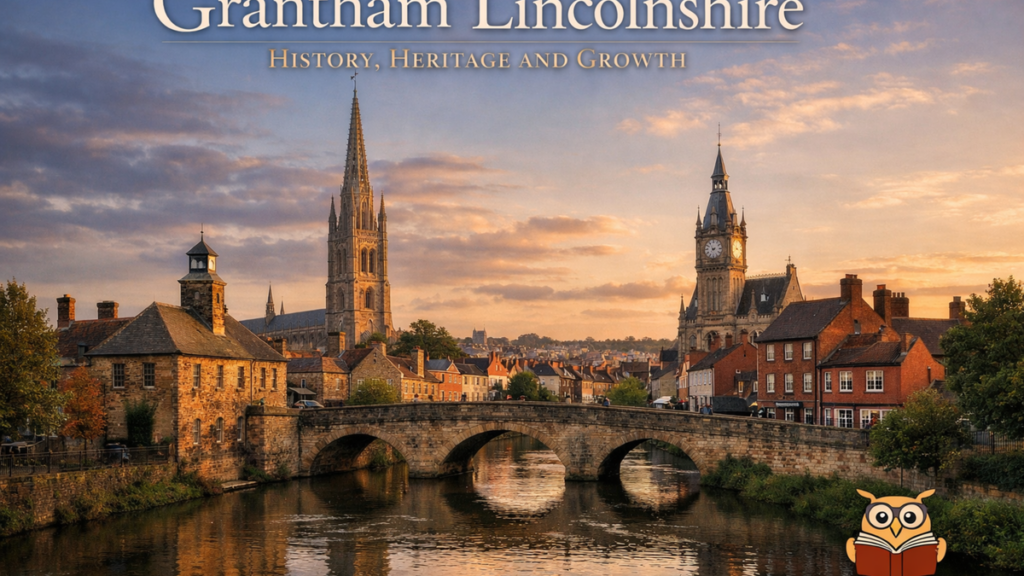
i have always found market towns fascinating because they hold centuries of stories within streets that people walk every day without noticing. Grantham is one of those towns where the past and present stand side by side in a natural and unforced way. Located in Lincolnshire, this historic English town combines medieval heritage, railway significance, agricultural roots, and modern residential growth. It has shaped national figures, supported trade for centuries, and adapted to economic changes without losing its local identity. In this article, I will explore Grantham in depth, examining its history, geography, architecture, economy, education system, transport connections, culture, and daily life in a way that gives a full and clear understanding of what makes this town distinctive.
Historical Foundations of Grantham
Grantham’s origins stretch back many centuries, and like many English market towns, it developed around trade, agriculture, and regional exchange. Its early growth was influenced by its location along important routes connecting larger cities and rural farming areas. Medieval markets allowed farmers and traders to gather regularly, selling livestock, grain, wool, and other goods essential to the regional economy. Over time, these markets formed the backbone of local prosperity and encouraged settlement growth.
During the medieval period, Grantham became known for its stone buildings and ecclesiastical architecture. Churches were not only religious centers but also social and economic hubs. Stone construction reflected both the availability of local materials and the growing importance of the town. The rise of guilds and craft industries strengthened Grantham’s standing in Lincolnshire.
The arrival of the railway in the nineteenth century transformed Grantham significantly. Rail connections linked it more efficiently to London and northern cities, allowing goods and passengers to travel quickly. This development encouraged industrial growth and supported population expansion. The railway era positioned Grantham as more than a rural market town; it became an important transport node in England’s expanding network.
Geography and Location
Grantham sits in the South Kesteven district of Lincolnshire, roughly positioned between larger urban centers. Its location has always been one of its strongest advantages. The surrounding countryside is characterized by rolling farmland, open skies, and agricultural fields that define much of Lincolnshire’s landscape.
The River Witham runs near the town, historically contributing to trade and agriculture. While not a major shipping river today, it once supported local movement of goods. The surrounding region is primarily agricultural, which influenced Grantham’s early development and continues to shape aspects of its economy.
Its geographical position between the Midlands and the East of England has ensured that Grantham remains connected while maintaining its distinct local identity. The balance between accessibility and rural surroundings gives the town both economic opportunity and a relatively peaceful atmosphere.
Architectural and Heritage Landmarks
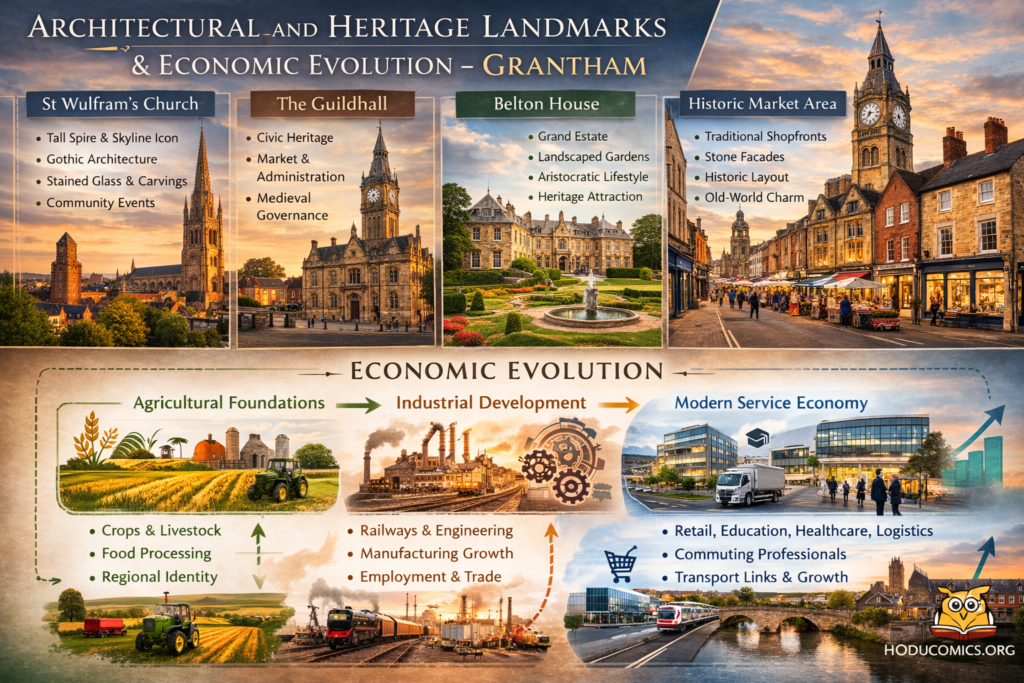
St Wulfram’s Church
One of the most striking landmarks in Grantham is St Wulfram’s Church. The tall spire dominates the skyline and serves as a visual anchor for the town. Gothic architectural features, stained glass windows, and detailed stone carvings reflect medieval craftsmanship. The church remains active today, hosting services, concerts, and community events.
The Guildhall
The Guildhall stands as a reminder of Grantham’s market and civic heritage. Historically, it was used for administrative functions and gatherings. Buildings like the Guildhall illustrate how local governance evolved from medieval systems into structured municipal administration.
Belton House
Located near Grantham, Belton House is a grand country estate surrounded by landscaped gardens. It represents the architectural tastes of the English aristocracy and provides insight into historical lifestyles of landed families. Today it serves as a heritage attraction and recreational space.
Historic Market Area
The town center retains elements of its historic layout. Traditional shopfronts, stone facades, and narrow streets reflect centuries of development. While modern retail chains exist, parts of the market area still maintain a sense of old-world charm.
Economic Evolution
Grantham’s economy has shifted over time, adapting to broader national trends. What began as an agriculture-focused market town later integrated manufacturing, engineering, and service industries.
Agricultural Foundations
Agriculture remains important to the surrounding region. Farms producing crops and livestock contribute to the local economy and support food processing industries. While fewer residents work directly in farming compared to earlier centuries, agriculture continues to influence the regional identity.
Industrial Development
With the arrival of railways, engineering and manufacturing grew. Industrial sites provided employment opportunities beyond farming. Over time, these industries modernized or transformed into logistics and light manufacturing operations.
Modern Service Economy
Today, Grantham benefits from a mixed economy that includes retail, education, healthcare, logistics, and commuting professionals who work in larger cities. Its transport links allow residents to live locally while accessing broader employment markets.
Economic Structure Overview
| Sector | Historical Importance | Current Role |
|---|---|---|
| Agriculture | High | Moderate but regionally significant |
| Manufacturing | Moderate to High | Reduced but present |
| Retail & Services | Moderate | High |
| Transport & Logistics | Moderate | High |
| Tourism & Heritage | Low | Growing |
Education in Grantham
Education has played an important role in Grantham’s social development. The town has maintained a reputation for structured schooling systems and academic performance.
Primary and secondary schools serve the local population, while grammar schools in the area have historically drawn students from surrounding communities. These institutions contribute to social mobility and regional academic standards.
Adult education and vocational training opportunities also support local workforce development. With changing economic demands, skills training in technology, healthcare, and business management has become increasingly important.
Transport Connections
Rail Links
Grantham’s railway station remains one of its strongest assets. Direct connections to London and other major cities make commuting feasible. This accessibility increases property demand and supports economic stability.
Road Network
Major roads connect Grantham to the Midlands and eastern England. Efficient road access benefits logistics companies and commuters alike.
Local Transport
Local bus services and pedestrian-friendly areas support daily movement within the town. Although rural areas may rely heavily on cars, central Grantham remains relatively accessible on foot.
Community and Culture
Grantham’s cultural life reflects its size: active but intimate. Community events, local fairs, farmers’ markets, and seasonal celebrations create opportunities for residents to gather and interact.
The arts scene includes amateur theatre productions, music performances, and community exhibitions. Libraries and local history groups help preserve heritage while encouraging learning.
Sports clubs, including football, cricket, and rugby teams, contribute to local pride and youth engagement. Recreational facilities provide both competitive and casual participation options.
Residential Life and Housing
Housing in Grantham ranges from historic stone cottages to modern developments. Victorian terraces reflect railway-era growth, while new estates cater to commuters and families.
Property affordability compared to larger cities attracts buyers seeking more space and a quieter environment. The balance between countryside and connectivity remains one of the town’s strongest residential advantages.
Housing Overview Table
| Housing Type | Typical Era | Characteristics |
|---|---|---|
| Stone Cottages | Medieval to Early Modern | Thick walls, traditional features |
| Victorian Terraces | 19th Century | Brick construction, compact layouts |
| Post-War Homes | Mid 20th Century | Functional design, larger plots |
| Modern Developments | 21st Century | Energy-efficient, family-oriented |
Governance and Public Services
Local governance is managed through district and county councils, responsible for services such as education, road maintenance, waste collection, and planning.
Healthcare services include local clinics and access to regional hospitals. Emergency services operate within county-wide systems.
Community safety initiatives, local policing, and neighborhood programs aim to maintain public confidence and wellbeing.
Tourism and Visitor Experience
Visitors to Grantham often come for heritage exploration, countryside relaxation, and nearby estates. The town offers a blend of history and rural charm without the overwhelming scale of larger tourist cities.
Walking tours highlight architectural features and historical narratives. Nearby parks and estates attract families and outdoor enthusiasts.
Environmental Considerations
Grantham’s future development increasingly considers sustainability. Housing expansions incorporate energy-efficient designs, and local initiatives promote recycling and conservation.
Green spaces and surrounding countryside provide environmental balance. The town’s scale allows for manageable planning and community involvement in environmental matters.
Challenges and Future Outlook
Like many market towns, Grantham faces challenges including retail competition from online platforms, transport funding pressures, and the need for sustainable growth. However, its strategic location and rail connectivity offer long-term potential.
Future development may focus on mixed-use housing, digital infrastructure improvements, and local enterprise growth. Maintaining historical character while encouraging innovation will be central to its evolution.
Conclusion
Grantham stands as a town shaped by history yet oriented toward the future. Its medieval foundations, railway growth, agricultural surroundings, and modern residential expansion form a layered identity that continues to evolve. While it may not dominate headlines like major cities, its steady development and community strength illustrate how regional towns remain essential to national life. Grantham offers heritage without stagnation, connectivity without chaos, and growth without losing sight of its roots.
Read: Los Roques: A Quiet Caribbean Archipelago Preserved by Restraint
FAQs
Where is Grantham located?
Grantham is located in Lincolnshire, England, positioned between major cities with strong transport connections.
Is Grantham a historic town?
Yes, Grantham has medieval origins and features historic churches, civic buildings, and traditional market areas.
What industries support Grantham’s economy today?
The economy includes retail, logistics, education, healthcare, agriculture, and commuting professionals.
Does Grantham have good transport links?
Yes, it has strong rail connections to London and road access to major regional routes.
Is Grantham a good place to live?
Many residents appreciate its balance of rural surroundings, community atmosphere, and commuter accessibility.