
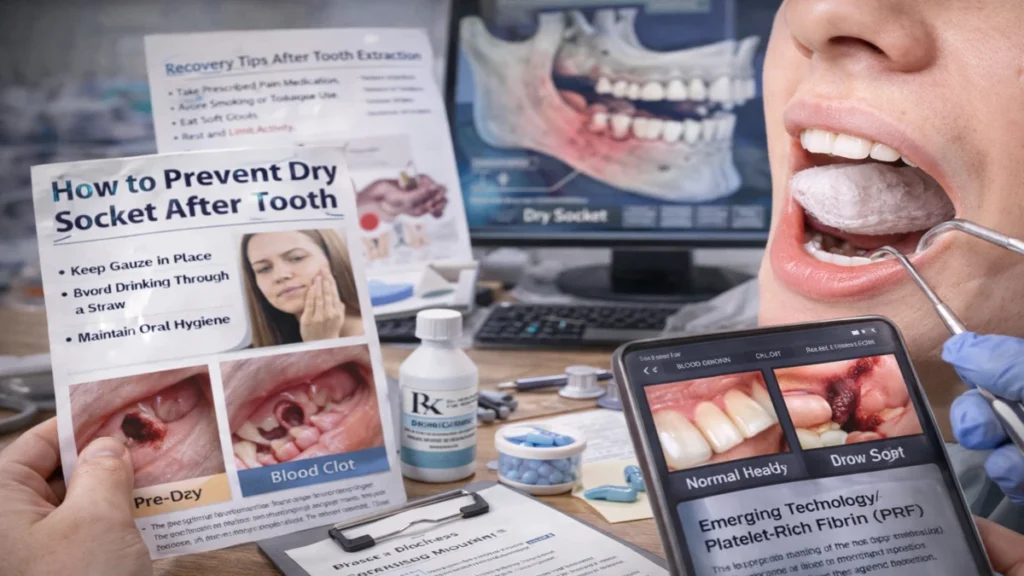
Learning how to avoid dry socket is mainly about protecting the small blood clot that forms in the empty tooth socket after an extraction. That clot is the body’s natural bandage. It shields exposed bone and nerves, provides a scaffold for new tissue growth, and allows the wound to heal quietly beneath it. When the clot is lost too early or fails to form, the socket is left open, sensitive, and vulnerable, producing the condition known as dry socket, or alveolar osteitis. The pain can be severe, radiating through the jaw, ear, or temple, and recovery becomes longer and more uncomfortable than expected.
People often search for ways to avoid dry socket because they want to prevent that intense pain and disruption. The good news is that most cases can be prevented with thoughtful care and a basic understanding of what threatens the clot. Actions that create suction in the mouth, like smoking, using straws, or forceful spitting, are the most common causes of clot loss. Rough brushing, eating hard or sharp foods, and returning too quickly to heavy physical activity can also disturb the fragile healing site.
Avoiding dry socket is not about complicated medical interventions. It is about respecting the body’s healing process during the first critical days after extraction. This article explains what dry socket is, why it happens, how to recognize early warning signs, and what steps both traditional and technologically advanced are now used to protect healing and reduce risk.
What Dry Socket Is and Why It Happens
Dry socket occurs when the blood clot that should protect the extraction site is lost, dissolves too quickly, or never forms properly. Without that clot, bone and nerve endings remain exposed to air, food, and bacteria. This exposure causes inflammation and pain and slows the formation of new tissue inside the socket.
The mouth is a dynamic environment. Saliva, chewing forces, temperature changes, and bacteria all interact with the healing site. The clot must remain stable long enough for gum tissue and new blood vessels to grow over it. If it is removed or destabilized too early, healing is interrupted and pain increases instead of fading.
Certain factors increase the likelihood of dry socket. Smoking introduces heat, chemicals, and suction that weaken clot stability. Oral contraceptives can alter clotting mechanisms. Traumatic extractions that disturb surrounding bone and tissue also increase risk. Understanding these influences allows patients and clinicians to plan ahead and reduce complications. – how to avoid dry socket.
Read: Pinched Nerve in Shoulder: Causes, Treatment, and Future Care
Early Signs and Symptoms
The most telling sign of dry socket is pain that becomes worse instead of better several days after extraction. Normal healing pain usually peaks within the first 24 to 48 hours and then gradually fades. Dry socket pain typically intensifies around the third or fourth day.
Patients may also notice a bad taste or unpleasant odor in the mouth, visible bone in the socket, or a feeling that the hole looks empty or gray instead of dark red. Pain may radiate into the jaw, ear, or head, making it difficult to sleep, eat, or concentrate.
Recognizing these signs early matters because prompt dental care can relieve pain and restart proper healing. However, the goal is to prevent the condition entirely, which depends largely on what happens during the first few days after extraction.
Immediate Post-Extraction Care
The first 72 hours after extraction are the most important for dry socket prevention. During this time, the blood clot is fragile and easily disturbed.
Patients are advised to bite gently on the gauze provided after extraction to help the clot form. Once bleeding stops, the area should be left undisturbed. Rinsing, spitting, or touching the socket with the tongue or fingers should be avoided.
Cold compresses can reduce swelling and discomfort without affecting the clot. Pain medications should be taken as directed, but excessive movement of the jaw or face should be minimized. Rest allows the body to direct resources toward healing.
Oral hygiene should continue everywhere except directly over the extraction site for the first day. Brushing should be gentle, and flossing should avoid the affected area until it is less sensitive. – how to avoid dry socket.
Lifestyle and Behavioral Factors
Lifestyle choices play a significant role in whether dry socket develops. Smoking is the single most important modifiable risk factor. The suction motion and the chemicals in smoke interfere with clot formation and stability, dramatically increasing dry socket risk.
Alcohol can thin the blood and slow healing. Vigorous exercise increases blood pressure and can promote clot displacement. Even simple habits like drinking through a straw or chewing gum can create enough suction to disrupt the clot.
Stress and lack of sleep also influence healing by affecting immune function and inflammation. Maintaining calm, hydration, and good nutrition supports the body’s repair processes.
Nutrition and Hydration
Food choices influence healing more than many people realize. Soft foods like yogurt, mashed potatoes, scrambled eggs, soups, and smoothies allow nourishment without mechanical irritation. Hard, crunchy, or spicy foods can scrape the socket or inflame surrounding tissue.
Hydration supports circulation and tissue repair. Drinking plenty of water without straws keeps the mouth moist and helps flush bacteria gently.
Protein, vitamin C, and zinc all contribute to wound healing. Including foods rich in these nutrients can support faster recovery.
Clinical Adjuncts and Preventive Measures
Dentists may recommend antiseptic rinses or gels to reduce bacterial load and protect the socket. Some clinicians use medicated dressings or biologically active materials that support clot stability and tissue growth.
In higher-risk patients, additional preventive steps may be taken, such as placing specialized healing materials into the socket during extraction or prescribing anti-inflammatory medications. – how to avoid dry socket.
Emerging Dental Technologies
New technologies are reshaping how dentists prevent and manage dry socket. Bioactive materials that dissolve slowly and release healing compounds are being developed to stabilize clots and stimulate tissue regeneration.
Wearable oral sensors are being explored that can monitor temperature, pH, and inflammation around surgical sites, potentially alerting patients and clinicians to early signs of complications.
Artificial intelligence is also being used to assess patient risk before surgery, helping clinicians tailor preventive strategies based on smoking status, medical history, and extraction complexity.
Expert Perspectives
Dr. Helen Morales, a dental surgeon, explains that “dry socket is preventable in most cases when patients understand the importance of protecting the clot and follow guidance carefully.”
Dental researcher Dr. Amir Patel notes that “new biomaterials are promising, but patient behavior in the first days after extraction still matters more than any technology.”
Hygienist Laura Chen emphasizes education, saying “people underestimate how much simple actions like avoiding straws and smoking really change outcomes.”
Comparison of Prevention Strategies
| Approach | Purpose | Example |
|---|---|---|
| Behavioral | Protect clot | No smoking, no straws |
| Dietary | Avoid irritation | Soft foods, hydration |
| Clinical | Reduce bacteria | Antiseptic rinses |
| Technological | Support healing | Bioactive dressings |
| Time Period | Risk Level | Main Focus |
|---|---|---|
| Day 0–3 | Highest | Clot protection |
| Day 4–7 | Moderate | Tissue growth |
| After 1 week | Lower | Normalization |
Takeaways
- Dry socket occurs when the protective blood clot is lost too early.
- Smoking and suction are the most common causes.
- Gentle care during the first three days is crucial.
- Soft foods and hydration support healing.
- Emerging technologies may further reduce risk in the future.
Conclusion
Avoiding dry socket is primarily about patience and respect for the body’s healing process. While the mouth is exposed to constant movement and bacteria, the blood clot formed after extraction is a remarkably effective natural dressing when left undisturbed. Protecting it through simple choices — avoiding suction, eating gently, resting, and maintaining hygiene — makes the difference between smooth recovery and painful complication.
Modern dentistry continues to refine preventive tools and materials, but no technology replaces the role of informed patient care. By understanding what dry socket is, why it happens, and how to prevent it, patients can approach extractions with confidence and reduce their risk of one of dentistry’s most uncomfortable complications.
FAQs
What causes dry socket?
It is caused by early loss or failure of the blood clot after extraction.
When is the risk highest?
During the first three to five days after the tooth is removed.
Can rinsing cause dry socket?
Yes, vigorous rinsing can dislodge the clot.
Is dry socket dangerous?
It is painful but usually not dangerous if treated promptly.
How long does healing take?
Normal healing usually takes one to two weeks.
REFERENCES
- Mayo Clinic. (2023, July 18). Dry socket — Diagnosis and treatment. Retrieved from https://www.mayoclinic.org/diseases-conditions/dry-socket/diagnosis-treatment/drc-20354382 (turn0search2)
- Mayo Clinic. (2023, July 18). Dry socket — Symptoms and causes. Retrieved from https://www.mayoclinic.org/diseases-conditions/dry-socket/symptoms-causes/syc-20354376 (turn0search4)
- Cleveland Clinic. (2025). Dry Socket: Symptoms, Causes & Treatment. Retrieved from https://my.clevelandclinic.org/health/diseases/17731-dry-socket (turn0search0)
- Medical News Today. (2024, June 3). How to prevent dry socket after a tooth extraction. Retrieved from https://www.medicalnewstoday.com/articles/how-to-prevent-dry-socket (turn0search3)
- Taberner-Vallverdú, M. et al. (2017). Efficacy of different methods used for dry socket prevention. Journal of Clinical and Experimental Dentistry. Retrieved from https://pmc.ncbi.nlm.nih.gov/articles/PMC5813994/ (turn0search6)