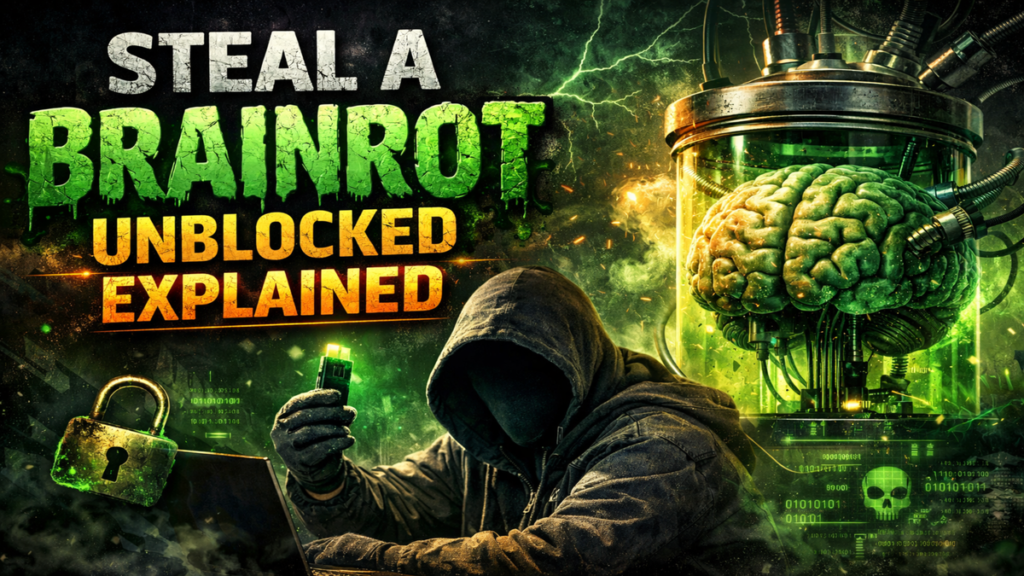
I first discovered the phrase “Steal a Brainrot Unblocked” while researching strange search queries trending among students and young gamers. The phrase may appear meaningless at first glance, but it actually points to a viral online game that has rapidly spread across the Roblox ecosystem and gaming websites that bypass school network restrictions. “Steal a Brainrot” is a competitive multiplayer experience where players collect absurd meme characters known as brainrots while attempting to steal them from rival players. The “unblocked” versions circulating online allow players to access the game even on restricted school computers, which explains why the phrase has become a frequent search term among students.
The popularity of the game cannot be understood without examining the cultural phenomenon known as brainrot. The term describes the overwhelming flood of chaotic internet memes and low-effort entertainment that dominate social media feeds. While the phrase sounds modern, it actually dates back to the nineteenth century when Henry David Thoreau used the expression “brain-rot” in Walden to criticize society’s obsession with trivial ideas. More than a century later, the internet revived the phrase in an ironic way. Today it is used humorously to describe the dizzying experience of consuming endless short videos, memes, and surreal online jokes.
“Steal a Brainrot” represents a curious transformation of this cultural trend. What began as absurd humor on platforms like TikTok and YouTube evolved into collectible characters inside a game. Players compete not for traditional fantasy heroes or weapons but for bizarre creatures inspired by viral memes. The result is a strange new genre of entertainment where internet nonsense becomes the foundation of gameplay, community, and digital competition.
The Evolution of the Brainrot Meme Phenomenon
The modern concept of brainrot emerged during the explosive growth of short-form social media content. Platforms such as TikTok accelerated the spread of rapid-fire memes that prioritized shock value, randomness, and surreal humor over traditional comedic structure. These memes often rely on bizarre visual combinations, unexpected sound effects, and intentionally nonsensical dialogue. The humor lies in confusion itself. When audiences encounter something that feels chaotic and unpredictable, their reaction is often laughter.
Internet researchers have noted that brainrot humor functions almost like a dialect within digital culture. Younger users quickly recognize recurring references, characters, and audio clips that outsiders might find incomprehensible. In online communities, sharing these memes becomes a form of participation in a collective joke. Over time, the absurd elements of the trend have become increasingly exaggerated. Creators began producing characters that fuse animals, objects, and exaggerated accents, turning each meme into a surreal miniature universe.
Scholars studying digital culture frequently describe this process as “memetic acceleration.” The internet’s ability to remix and distribute content instantly means that each joke evolves rapidly. Within days or even hours, a meme can spawn dozens of variations, each more exaggerated than the last. Brainrot culture thrives in this environment because its randomness makes it infinitely adaptable. The concept does not depend on logic or narrative structure, allowing creators to generate endless absurd combinations that continue surprising audiences.
Italian Brainrot and Surreal Meme Characters
One particularly influential strand of the brainrot meme ecosystem became known online as “Italian brainrot.” These memes feature characters with exaggerated pseudo-Italian names and often rely on AI-generated imagery combined with dramatic voice narration. The characters themselves are usually bizarre hybrids that defy conventional logic. A shark wearing sneakers, a frog fused with a cappuccino cup, or a dancing pigeon with mechanical limbs might appear in a typical Italian brainrot video. The humor comes from the deliberate absurdity of these combinations.
This meme style gained popularity through viral TikTok clips that featured exaggerated Italian-style voiceovers narrating the actions of strange creatures. The characters’ names often sound melodic and rhythmic, contributing to their memorability. As these videos spread across social media, creators began producing hundreds of similar characters, each with its own strange personality and aesthetic style.
The influence of artificial intelligence tools has also been significant. Image-generation programs made it possible for creators to design elaborate surreal creatures quickly, without traditional digital art skills. This accessibility allowed brainrot content to multiply rapidly across the internet. Instead of relying on carefully crafted illustrations, creators could generate endless strange characters in minutes. When these characters eventually migrated into games like “Steal a Brainrot,” they carried the chaotic humor of meme culture directly into interactive entertainment.
How the Game “Steal a Brainrot” Works
At its core, “Steal a Brainrot” combines the structure of a tycoon-style game with competitive multiplayer mechanics. Players begin the game with a small base and minimal resources. From there they acquire brainrot characters that generate income over time. These characters function as digital assets inside the game’s economy. The more characters a player collects, the faster they accumulate in-game currency.
The twist that makes the game distinctive is the ability to steal characters from other players. Bases can be infiltrated, and if defenses are weak, rival players can capture valuable brainrots and add them to their own collection. This mechanic creates constant tension between offense and defense. Players must decide whether to invest resources in protecting their base or risk attacking others to expand their collection more quickly.
Because characters produce income continuously, the game becomes a cycle of accumulation, risk, and retaliation. Losing a valuable character can feel devastating, while successfully stealing one from another player provides a powerful sense of triumph. This emotional volatility contributes to the addictive nature of the gameplay loop. Every session presents opportunities for dramatic reversals of fortune, which encourages players to keep participating in the chaotic competition.
Why Unblocked Versions Spread in Schools
The phrase “Steal a Brainrot Unblocked” emerged because many schools restrict access to gaming websites and entertainment platforms. Students often search for alternative versions of popular games hosted on sites that bypass these restrictions. These “unblocked” versions usually operate directly in a web browser, allowing them to run on school computers without installing additional software.
This pattern is not unique to one game. For years, students have searched for unblocked versions of puzzle games, arcade titles, and multiplayer experiences. However, meme-driven games like “Steal a Brainrot” spread particularly quickly through school environments because they are easy to understand and require little technical skill. A student can start playing within seconds, and the chaotic humor of the characters often sparks curiosity among classmates.
Word of mouth plays a crucial role in the spread of these games. When one student discovers a working unblocked site, the link often circulates through messaging apps, group chats, or social media. Within days, an entire classroom might be aware of the game. The sense of playing something that technically violates school rules adds an element of rebellion that makes the experience even more appealing for young players.
The Psychology Behind Brainrot Games
The appeal of brainrot games is closely connected to the psychology of novelty and unpredictability. Human brains respond strongly to surprising stimuli. When players encounter bizarre characters and unexpected outcomes, their attention becomes intensely focused on the experience. This response is amplified in games where success or failure depends on quick decisions and strategic timing.
Another psychological factor is the sense of ownership players develop over digital assets. Even though brainrot characters are essentially humorous images, players begin to perceive them as valuable possessions because they generate progress within the game. When another player steals one of these assets, the emotional reaction can be surprisingly strong. The game’s designers intentionally use this mechanic to create dramatic tension between players.
The absurd humor of brainrot content also contributes to its popularity. Traditional jokes rely on logical setups and punchlines, but brainrot humor often rejects structure entirely. The randomness itself becomes entertaining. Players laugh not because the joke makes sense but because it defies expectations. This unpredictable humor keeps the experience fresh even after repeated play sessions.
The Influence of Artificial Intelligence on Meme Gaming
Artificial intelligence has dramatically expanded the possibilities for meme-based games. AI image generators allow developers and creators to design new characters quickly and experiment with increasingly strange visual combinations. As a result, the number of potential brainrot characters is virtually limitless. Each new design can be introduced into the game as a collectible item, ensuring that the ecosystem continues evolving.
The integration of AI-generated voices and sound effects further enhances the surreal atmosphere of brainrot culture. Dramatic narrations, exaggerated accents, and absurd catchphrases give each character a distinctive personality. These elements make the characters memorable and encourage players to share clips and screenshots online.
In many ways, AI tools have transformed meme culture from a passive viewing experience into an interactive creative process. Players and creators can contribute new characters, jokes, and variations that expand the game’s universe. This collaborative creativity explains why brainrot games can grow rapidly despite their seemingly nonsensical themes.
Cultural Significance of Meme-Driven Games
Games like “Steal a Brainrot” illustrate how internet humor has evolved into a participatory culture rather than a simple form of entertainment. Memes no longer exist only as images or short videos. They have become the building blocks of interactive experiences that blend gaming, storytelling, and social interaction.
For younger generations, participating in meme culture is a way of communicating identity and belonging. Understanding the references within brainrot humor signals familiarity with the online communities where these jokes originate. When players collect or trade meme characters in a game, they are also participating in a broader cultural conversation.
Some critics dismiss brainrot culture as meaningless or intellectually shallow. However, researchers increasingly view it as a form of creative expression shaped by the speed and complexity of digital life. The randomness of brainrot humor may reflect the overwhelming amount of information people encounter online every day. In that sense, the absurdity becomes a mirror of the modern internet itself.
Takeaways
The rise of “Steal a Brainrot Unblocked” demonstrates how internet humor, gaming mechanics, and social sharing can merge into a single cultural phenomenon. Brainrot culture has transformed surreal memes into collectible digital assets within competitive games. The popularity of unblocked versions highlights how students adapt technology to bypass restrictions and access entertainment. AI tools have accelerated the creation of bizarre characters that fuel meme ecosystems. Ultimately, the game reflects a broader shift in online entertainment where absurdity, unpredictability, and community participation define the experience.
Conclusion
The strange phrase “Steal a Brainrot Unblocked” encapsulates a fascinating moment in the evolution of internet culture. What began as chaotic meme humor has evolved into an interactive gaming experience that spreads across classrooms, social media feeds, and gaming communities worldwide. The game’s popularity reveals how digital entertainment continues to blur the boundaries between humor, creativity, and competition.
While critics may view brainrot culture as a symbol of declining attention spans, it can also be understood as a creative adaptation to the overwhelming pace of online life. Younger generations have developed new forms of humor that thrive on unpredictability and rapid remixing. Games like “Steal a Brainrot” capture that spirit by transforming absurd memes into interactive experiences that encourage collaboration, rivalry, and experimentation.
As internet culture continues evolving, similar meme-driven games will likely appear, each reflecting the latest trends in digital creativity. Whether people see brainrot as nonsense or innovation, one thing is clear: the internet has found yet another way to turn its strangest jokes into shared experiences that captivate millions of players.
Read: IHG Merlin System Explained
FAQs
What is Steal a Brainrot Unblocked?
It refers to browser-based versions of the game “Steal a Brainrot” that can be accessed on networks where gaming websites are usually restricted.
Is Steal a Brainrot part of Roblox?
Yes. The original game exists within the Roblox platform, where players collect and steal meme-inspired characters.
What does brainrot mean online?
Brainrot is internet slang describing the overwhelming consumption of chaotic memes or repetitive digital content.
Why do students search for unblocked games?
Students often look for unblocked games to play during school hours on networks that normally block gaming sites.
Are meme-based games becoming more common?
Yes. As meme culture grows, more developers are experimenting with games built around viral internet humor.